

txriii.over-blog.com/
7 Janvier 2021

The terms of the software license agreement included with any software you download will control your use of the software.
INTEL SOFTWARE LICENSE AGREEMENTThunderbolt 3 also includes support for USB 3.1 Gen 2, as well as earlier USB versions. USB 3.1 Gen 2 provides connection speeds up to 10 Gbps, which is as fast as the original Thunderbolt specification and is certainly fast enough for most general-purpose storage and external connection needs. Thunderbolt™ 3 brings Thunderbolt to USB-C at speeds up to 40 Gbps, creating one compact port that does it all - delivering the fastest, most versatile connection to any dock, display, or data device. For the first time, one computer port connects to Thunderbolt devices, every display, and billions of USB devices. The G-RAID with Thunderbolt 3 is a high-performance, dual Enterprise-class 7200RPM hard drive storage system featuring Thunderbolt 3, USB-C™ (supports USB 3.1 Gen 2) and HDMI ® connectivity for ultimate flexibility.
IMPORTANT - READ BEFORE COPYING, INSTALLING OR USING.
Do not use or load this software and any associated materials (collectively,
the 'Software') until you have carefully read the following terms and
conditions. By loading or using the Software, you agree to the terms of this
Agreement. If you do not wish to so agree, do not install or use the Software.
LICENSES: Please Note:
- If you are a network administrator, the 'Site License' below shall
apply to you.
- If you are an end user, the 'Single User License' shall apply to you.
- If you are an original equipment manufacturer (OEM), the 'OEM License'
shall apply to you.
SITE LICENSE. You may copy the Software onto your organization's computers
for your organization's use, and you may make a reasonable number of
back-up copies of the Software, subject to these conditions:
1. This Software is licensed for use only in conjunction with Intel
component products. Use of the Software in conjunction with non-Intel
component products is not licensed hereunder.
2. You may not copy, modify, rent, sell, distribute or transfer any part
of the Software except as provided in this Agreement, and you agree to
prevent unauthorized copying of the Software.
3. You may not reverse engineer, decompile, or disassemble the Software.
4. You may not sublicense or permit simultaneous use of the Software by
more than one user.
5. The Software may include portions offered on terms in addition to those
set out here, as set out in a license accompanying those portions.
SINGLE USER LICENSE. You may copy the Software onto a single computer for Disk driver download windows 10.
your personal, noncommercial use, and you may make one back-up copy of the
Software, subject to these conditions:
1. This Software is licensed for use only in conjunction with Intel
component products. Use of the Software in conjunction with non-Intel
component products is not licensed hereunder.
2. You may not copy, modify, rent, sell, distribute or transfer any part
of the Software except as provided in this Agreement, and you agree to
prevent unauthorized copying of the Software.
3. You may not reverse engineer, decompile, or disassemble the Software.
4. You may not sublicense or permit simultaneous use of the Software by
more than one user.
5. The Software may include portions offered on terms in addition to those
set out here, as set out in a license accompanying those portions.
OEM LICENSE: You may reproduce and distribute the Software only as an
integral part of or incorporated in Your product or as a standalone
Software maintenance update for existing end users of Your products,
excluding any other standalone products, subject to these conditions:
1. This Software is licensed for use only in conjunction with Intel
component products. Use of the Software in conjunction with non-Intel
component products is not licensed hereunder.
2. You may not copy, modify, rent, sell, distribute or transfer any part
of the Software except as provided in this Agreement, and you agree to
prevent unauthorized copying of the Software.
3. You may not reverse engineer, decompile, or disassemble the Software.
4. You may only distribute the Software to your customers pursuant to a
written license agreement. Such license agreement may be a 'break-the-
seal' license agreement. At a minimum such license shall safeguard
Intel's ownership rights to the Software.
5. The Software may include portions offered on terms in addition to those
set out here, as set out in a license accompanying those portions.
NO OTHER RIGHTS. No rights or licenses are granted by Intel to You, expressly
or by implication, with respect to any proprietary information or patent,
copyright, mask work, trademark, trade secret, or other intellectual property
right owned or controlled by Intel, except as expressly provided in this
Agreement.
OWNERSHIP OF SOFTWARE AND COPYRIGHTS. Title to all copies of the Software
remains with Intel or its suppliers. The Software is copyrighted and
protected by the laws of the United States and other countries, and
international treaty provisions. You may not remove any copyright notices
from the Software. Intel may make changes to the Software, or to items
referenced therein, at any time without notice, but is not obligated to
support or update the Software. Except as otherwise expressly provided, Intel
grants no express or implied right under Intel patents, copyrights,
trademarks, or other intellectual property rights. You may transfer the
Software only if the recipient agrees to be fully bound by these terms and if
you retain no copies of the Software.
LIMITED MEDIA WARRANTY. If the Software has been delivered by Intel on
physical media, Intel warrants the media to be free from material physical
defects for a period of ninety days after delivery by Intel. If such a defect
is found, return the media to Intel for replacement or alternate delivery of
the Software as Intel may select.
EXCLUSION OF OTHER WARRANTIES. EXCEPT AS PROVIDED ABOVE, THE SOFTWARE IS
PROVIDED 'AS IS' WITHOUT ANY EXPRESS OR IMPLIED WARRANTY OF ANY KIND
INCLUDING WARRANTIES OF MERCHANTABILITY, NONINFRINGEMENT, OR FITNESS FOR A
PARTICULAR PURPOSE. Intel does not warrant or assume responsibility for the
accuracy or completeness of any information, text, graphics, links or other
items contained within the Software.
LIMITATION OF LIABILITY. IN NO EVENT SHALL INTEL OR ITS SUPPLIERS BE LIABLE
FOR ANY DAMAGES WHATSOEVER (INCLUDING, WITHOUT LIMITATION, LOST PROFITS,
BUSINESS INTERRUPTION, OR LOST INFORMATION) ARISING OUT OF THE USE OF OR
INABILITY TO USE THE SOFTWARE, EVEN IF INTEL HAS BEEN ADVISED OF THE
POSSIBILITY OF SUCH DAMAGES. SOME JURISDICTIONS PROHIBIT EXCLUSION OR
LIMITATION OF LIABILITY FOR IMPLIED WARRANTIES OR CONSEQUENTIAL OR INCIDENTAL
DAMAGES, SO THE ABOVE LIMITATION MAY NOT APPLY TO YOU. YOU MAY ALSO HAVE
OTHER LEGAL RIGHTS THAT VARY FROM JURISDICTION TO JURISDICTION.
TERMINATION OF THIS AGREEMENT. Intel may terminate this Agreement at any time
if you violate its terms. Upon termination, you will immediately destroy the
Android usb windows 7. Software or return all copies of the Software to Intel.
APPLICABLE LAWS. Claims arising under this Agreement shall be governed by the
laws of California, excluding its principles of conflict of laws and the
United Nations Convention on Contracts for the Sale of Goods. You may not
export the Software in violation of applicable export laws and regulations.
Intel is not obligated under any other agreements unless they are in writing
and signed by an authorized representative of Intel.
GOVERNMENT RESTRICTED RIGHTS. The Software is provided with 'RESTRICTED
RIGHTS.' Use, duplication, or disclosure by the Government is subject to
restrictions as set forth in FAR52.227-14 and DFAR252.227-7013 et seq. or its
successor. Use of the Software by the Government constitutes acknowledgment
of Intel's proprietary rights therein. Contractor or Manufacturer is Intel
2200 Mission College Blvd., Santa Clara, CA 95052.
What is a Thunderbolt hard drive? Do you know Thunderbolt interface? Is Thunderbolt the same as USB-Type-C? If you don't understand these questions, you can read this post, in which MiniTool introduces Thunderbolt interface and Thunderbolt hard drive to you.
As the name implies, a Thunderbolt hard drive is a hard drive with a Thunderbolt interface, which is a technology developed by Intel in collaboration with Apple.
Thunderbolt is a data transmission protocol combining PCI Express data transmission technology and DisplayPort display technology. Therefore, it can transmit data and video signals at the same time.
So far, the Thunderbolt interface has developed to the third generation: Thunderbolt 3. Thunderbolt 1 and 2 are integrated with Mini DisplayPort (a physical port), while Thunderbolt 3 is integrated with USB Type-C (a physical port). Therefore, Thunderbolt 3 is incompatible with Thunderbolt 1 and 2.
In this post, I will mainly focus on Thunderbolt 3, because Thunderbolt 1 and 2 are not popular due to the following reason: their physical ports are Apple Mini DPs, which cannot be used in other electronic devices; therefore, not many manufacturers support them.
Further Reading:
Thunderbolt interface is usually used as an interface for connecting external devices. Therefore, people usually compare it with the USB interface.
Do you really know USB-Type-C and Thunderbolt 3?
Since the USB Type-C specification was released in 2014, many new 3C devices such as Android mobile devices, laptops, desktops, and even game consoles have begun to use this connection port.
USB Type-C port can accommodate multiple protocols. The more protocols it accommodates, the more functions it can implement. The USB Type-C port can accommodate the following protocols:
Data Transmission Protocols: USB 2.0 (480Mbps), USB 3.0 (5Gbps), USB 3.1 (10Gbps), USB 3.2 (20Gbps), and Thunderbolt 3 (40Gbps). With these data transmission protocols, the USB Type-C can transfer data. In addition, these protocols also partly determine how fast your external hard drive can be.
USB PD (Power Delivery) Protocol: It is one of the current mainstream fast charging protocols. It can increase power transmission through USB cables and connectors to expand the power supply capability of the USB cable bus. The power delivered can reach up to 100W. With this protocol, you can use the USB-Type-C to charge your phone and computer fast.
Display Port Protocol: It is a digital video transmission protocol that can transmit audio and video simultaneously. With this protocol, you can connect peripheral displays via corresponding adapters to output video and audio, or you can connect external discrete graphics cards to expand graphics performance.
At the same time, you have to face the fact that most of USB interfaces mounted on devices can only transfer data and use USB 3.0 protocol (not to mention USB 3.1 and USB 3.2). Some advanced USB interfaces may integrate USB 3.0 and DP (Display Port) to achieve both data and video transmission.
Only a few full-featured USB interfaces can integrate USB 3.0, DP, and USB PD to realize data transmission, video transmission, and fast charge.
As for Thunderbolt 3 interface, it is the top-level presentation of the USB Type-C interface. It uses Thunderbolt 3 protocol, which must integrate PCI-E data transmission technology and DP technology, but optionally integrate USD PD. In addition, the Thunderbolt 3 protocol is compatible with USB 2.0, 3.0, and 3.1.
Do you know what SSD drive is? El capitan 10 11 0 download dmg. This article will explain some SSD Terminologies and help you to fully understand SSD disk. https://downafil862.weebly.com/model-mayhem-password-free-crack-2.html.
After learning about USB-Type-C and Thunderbolt 3, you may want to know about Thunderbolt 3 hard drives. Thunderbolt 3 is currently the fastest interface in external storage devices. Due to the high transfer rate, the Thunderbolt 3 interface is usually mounted on SSDs to meet the demand for high-speed external disks.
If your computer has a Thunderbolt 3 interface and you need a high-speed external disk to complete some data to HDDs, because SSDs have the risk of data loss when they are not used often.
If your computer is a Windows PC, you should format it to NTFS, exFAT, etc. If your computer is a Mac PC, you should format it to APFS, HFS+, etc. Whether it is Windows or MAC, they have their own disk management tools to help you format the Thunderbolt external hard drive to a right file system.
Let's take Windows PC as an example. Follow the steps below to format your drive to NTFS file system:
Step 1: Press 'Windows + R' keys simultaneously to call out Run box. Then, type 'diskmgmt.msc' into the Run dialogue box and hit Enter key to open Disk Management.
Step 2: Right-click the partition on the Thunderbolt external hard drive and then choose Format. from the context menu.
Step 3: In the pop-up window, choose NTFS file system and keep other parameters as default. Then, click OK button to start the reformatting process.
To make the Thunderbolt external hard drive 4K aligned, you need the help of a third-party program like MiniTool Partition Wizard, in which 4k alignment is a free feature. If your computer is a Windows PC, MiniTool Partition Wizard is suitable for you. Refer to the following steps to 4k align the drive:
Step 1: Click the above button to free download MiniTool Partition Wizard. Image tricks v3 7. Then, install and launch it on your PC.
Step 2: Go to its main interface and right-click the partition on the Thunderbolt external hard drive. Then, choose Align.
Step 3: Click the Apply button to execute the pending operations.
The simplest way is to use Copy/Cut + Paste feature. But if the files are too many or large, you can clone the drive. To clone the drive, you may also need the help of MiniTool Partition Wizard. Please follow the steps below:
Step 1: Download, install, and launch MiniTool Partition Wizard. Then, go to its main interface and right-click the partition on the Thunderbolt hard drive to choose Copy.
Step 2: Choose an Unallocated space as the destination and click Next button. Then, follow the wizard to finish the process.
Step 3: Click the Apply button to execute the pending operations.
Want to get best performance from SSD (solid state drive) in Windows 10/8.1/8/7? You can find step-by-step tutorials from this post.
Certainly not, the Thunderbolt 1 and 2 use Mini DisaplyPort interface, not USB-Type-C. Thunderbolt 3 uses USB-Type-C port and you can distinguish it from USB-Type-C port by a lightning sign. It is the top-level presentation of the USB Type-C port.
However, the Thunderbolt 3 interface and USB-Type-C port are very different, because the USB-Type-C may lack some features.
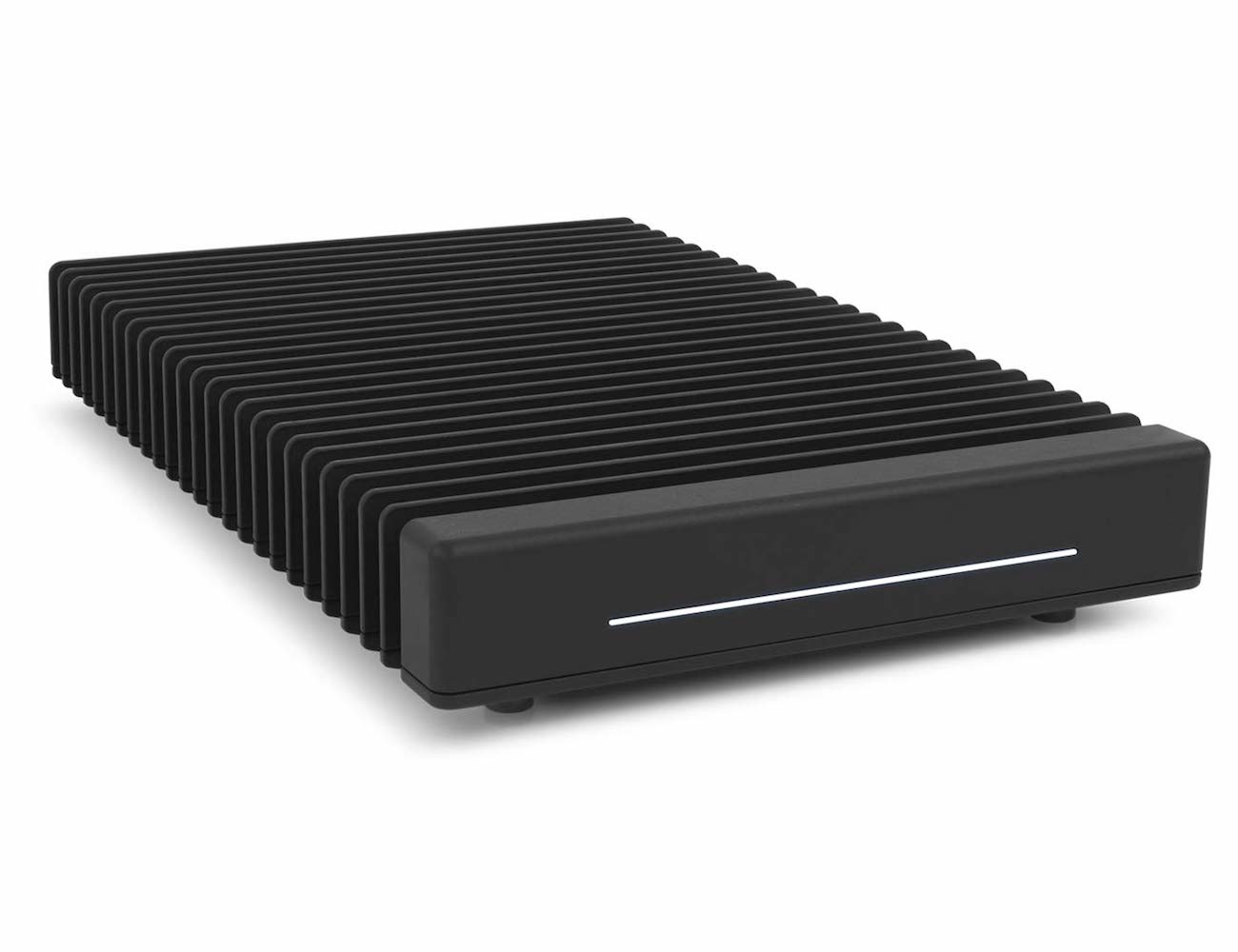
To take advantages of Thunderbolt interface, the best Thunderbolt external hard drives are always SSDs. Here are 3 Thunderbolt external hard drive SSDs recommended for you:
Have this post answered your doubts about Thunderbolt interface and Thunderbolt hard drive? Do you have any difficulty in picking a suitable Thunderbolt external hard drive? Do you have difficulty in managing your hard drive?
If you have any problem, please leave a comment below or contact us via [email protected]. We will reply to you as soon as possible.
Thunderbolt was developed by Intel (in collaboration with Apple) way back in 24 February 2011, it is the brand name of a hardware interface that allows the connection of external peripherals to a computer or laptop. Thunderbolt 1 and 2 use the same connector as Mini DisplayPort, whereas Thunderbolt 3 re-uses the USB-C connector from USB. Thunderbolt 1 is capable of transmitting at a rate of 10 Gbps, and Thunderbolt 2 is capable of transmitting at a rate of 20 Gbps. Thunderbolt 3 is capable of transmitting at a rate of 40 Gbps, which is a lot quicker than USB 3.1's rate of 10 Gbps or USB 3.0's limit of 5 Gbps. All versions of Thunderbolt allow for daisy-chaining up to six devices together to a host and in addition to data, can also carry Hi-Def video and audio signals. Because Thunderbolt takes up less space and has faster speeds, we believe it will become more and more popular in the future. Maybe this will take a few years more for Thunderbolt become to become as popular as the current USB on the host side, but when it does it will simplify the way we work with devices.
By default we are not able to install Windows to a Thunderbolt drive, we need to use third party software for this purpose. WinToUSB is the best portable Windows creation software, and it is also the first software in the world that allows users to install Windows to a Thunderbolt drive and then run Windows from it. Below we will explain in detail how to use WinToUSB to install Windows to a Thunderbolt drive.
Step 1. Connect the Thunderbolt drive to the computer, then run WinToUSB.
Step 2. Click the button, then click the button and select the Windows 10 installation ISO file from the open dialog box.
Step 3. WinToUSB scans for and lists installable operating systems in the Windows 10 installation ISO. Please select the edition of Windows you want to install, then click 'Next'.
Step 4. Select the destination Thunderbolt drive in the drop-down list. If the Thunderbolt drive is not correctly recognized by WinToUSB, you need to click the button for the program to recognize the Thunderbolt drive.
Step 5. A pop-up will appear asking you if you want to format it to continue, select the partition scheme you want to use and click 'Yes' to format it. If you choose 'Keep the existing partition scheme', you need to manually prepare the partitions on the Thunderbolt drive before this step, and here is the user guide on how to manually prepare partitions for Windows To Go. User friendly video editing software. Please note that the 'Keep the existing partition scheme' option is valid only for an external disk.
Step 6. Select the system partition and boot partition from the partition list, the selected partitions will be marked as red, then click 'Next'.
Step 7. After clicking 'Next', WinToUSB begins installing Windows 10 to the Thunderbolt drive.
Step 8. It takes some time to install. After installation restart the computer and change BIOS to boot from your Thunderbolt drive.
Step 9. Windows 10 normal installation starts up and you have to complete all the installation steps. After that, you can install programs, copy files, etc.
Follow these simple steps, you can install Windows to a Thunderbolt drive and then run Windows form the Thunderbolt drive.


/image%2F6288178%2F20210327%2Fob_a48317_imovie-on-windows-8-1.jpeg)
/image%2F6288178%2F20210327%2Fob_2e9602_installesd-dmg-windows-7.jpeg)
/image%2F6288178%2F20210327%2Fob_1a7e2a_usb-ssd-drive.jpeg)
/image%2F6288178%2F20210327%2Fob_8e3cae_adobe-products-acrobat-pdf.jpeg)